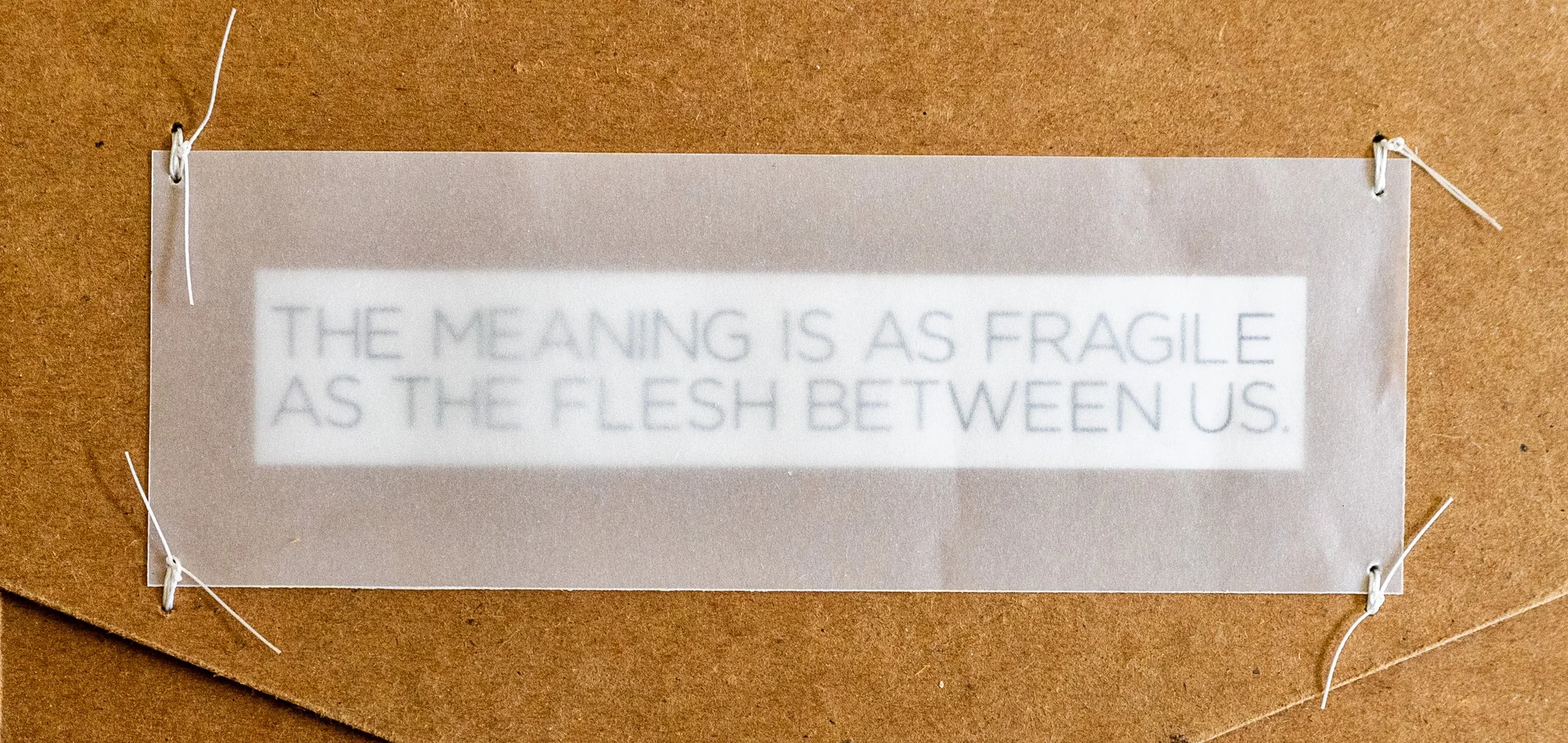
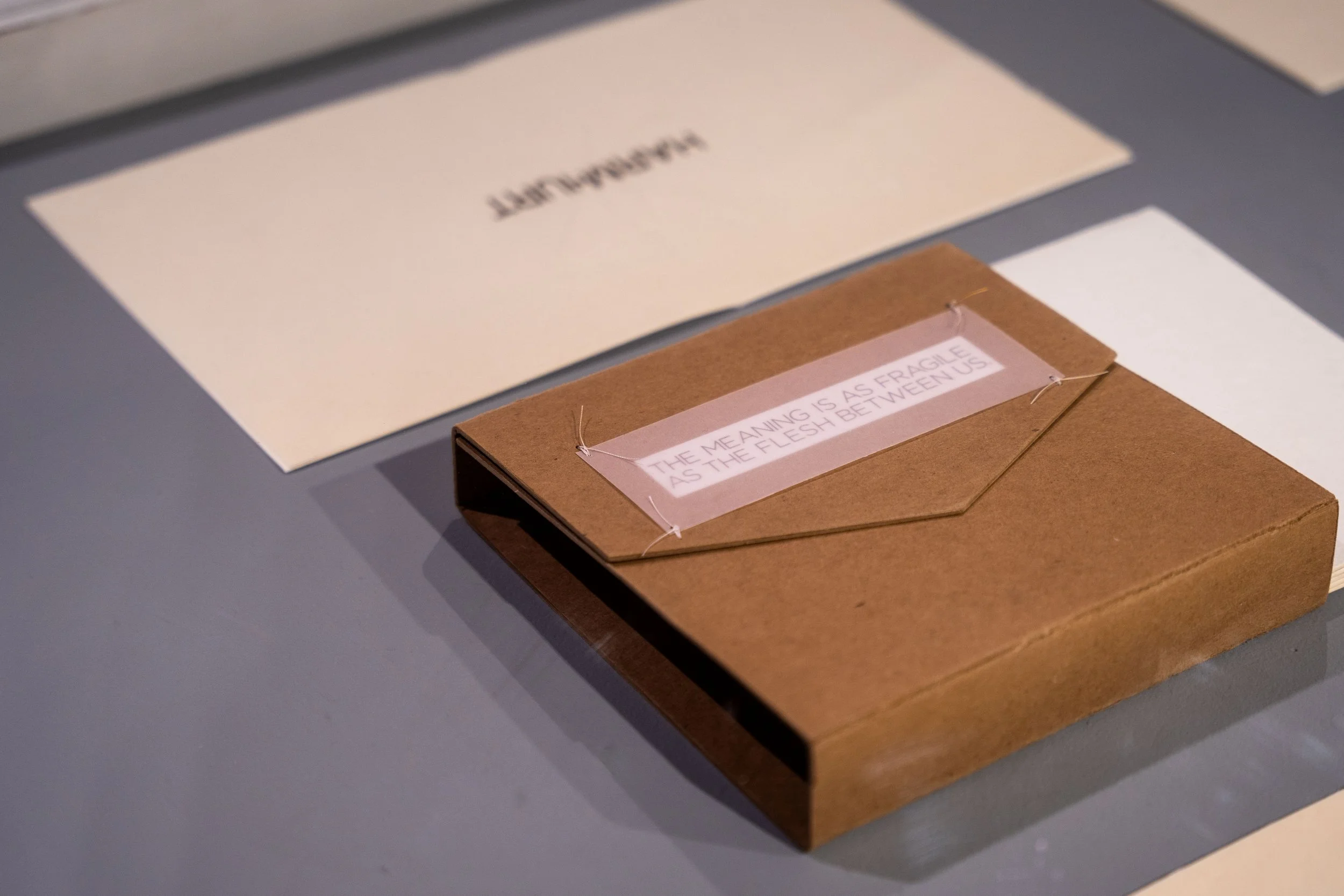
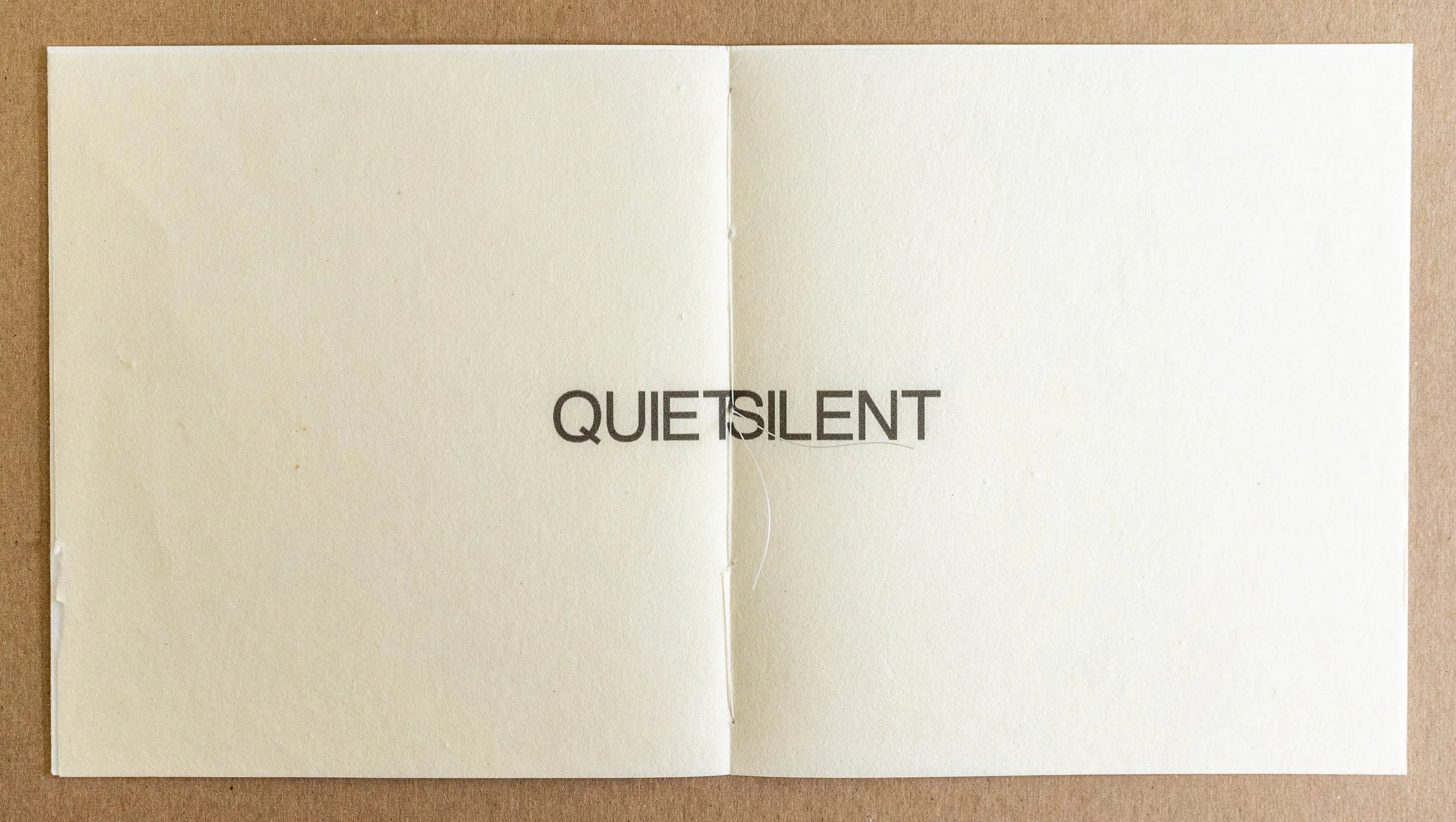
The Meaning is as Fragile as the Flesh Between Us.
Hand bound book. Mulberry paper. Suture thread. 2025.
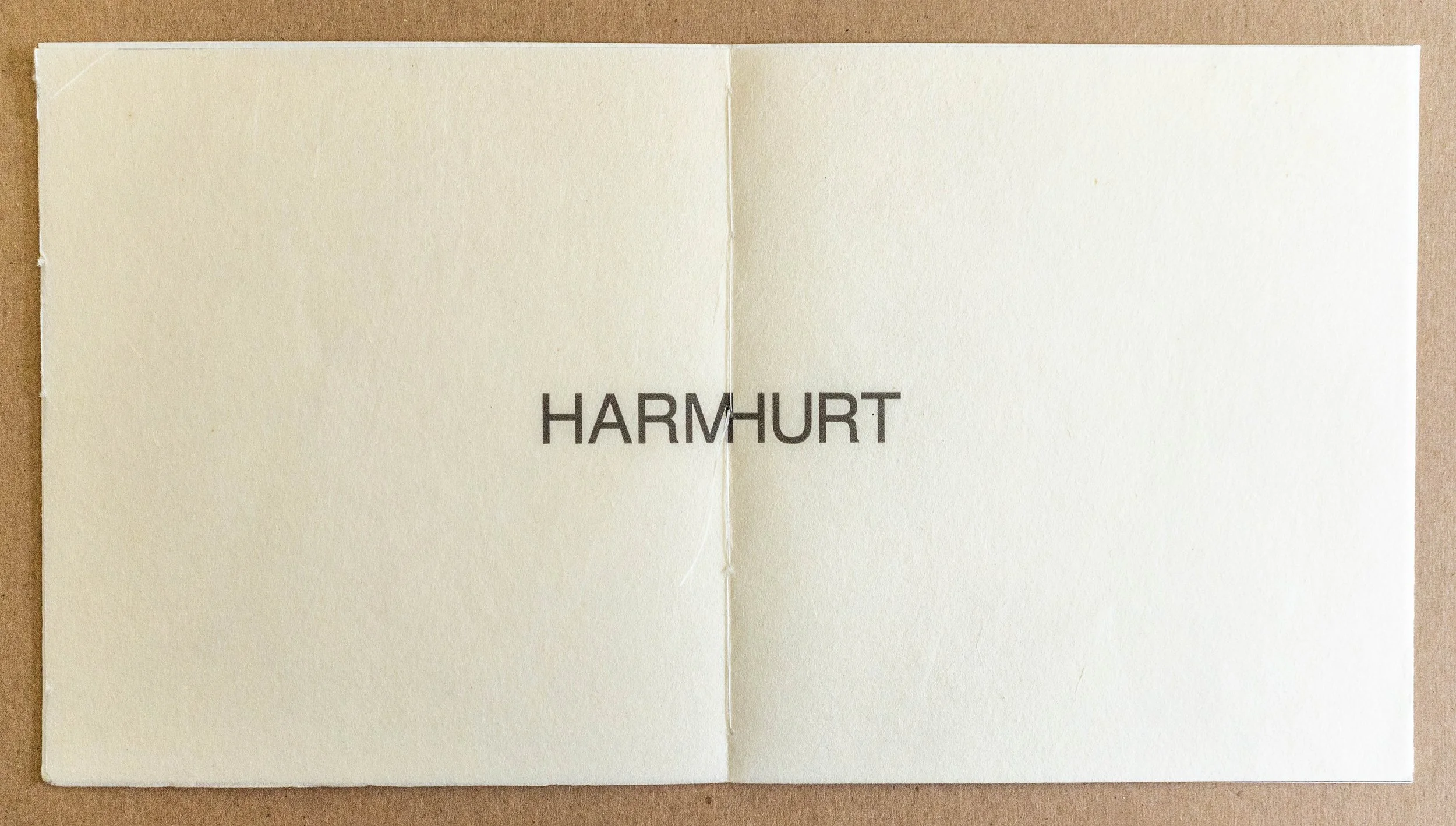
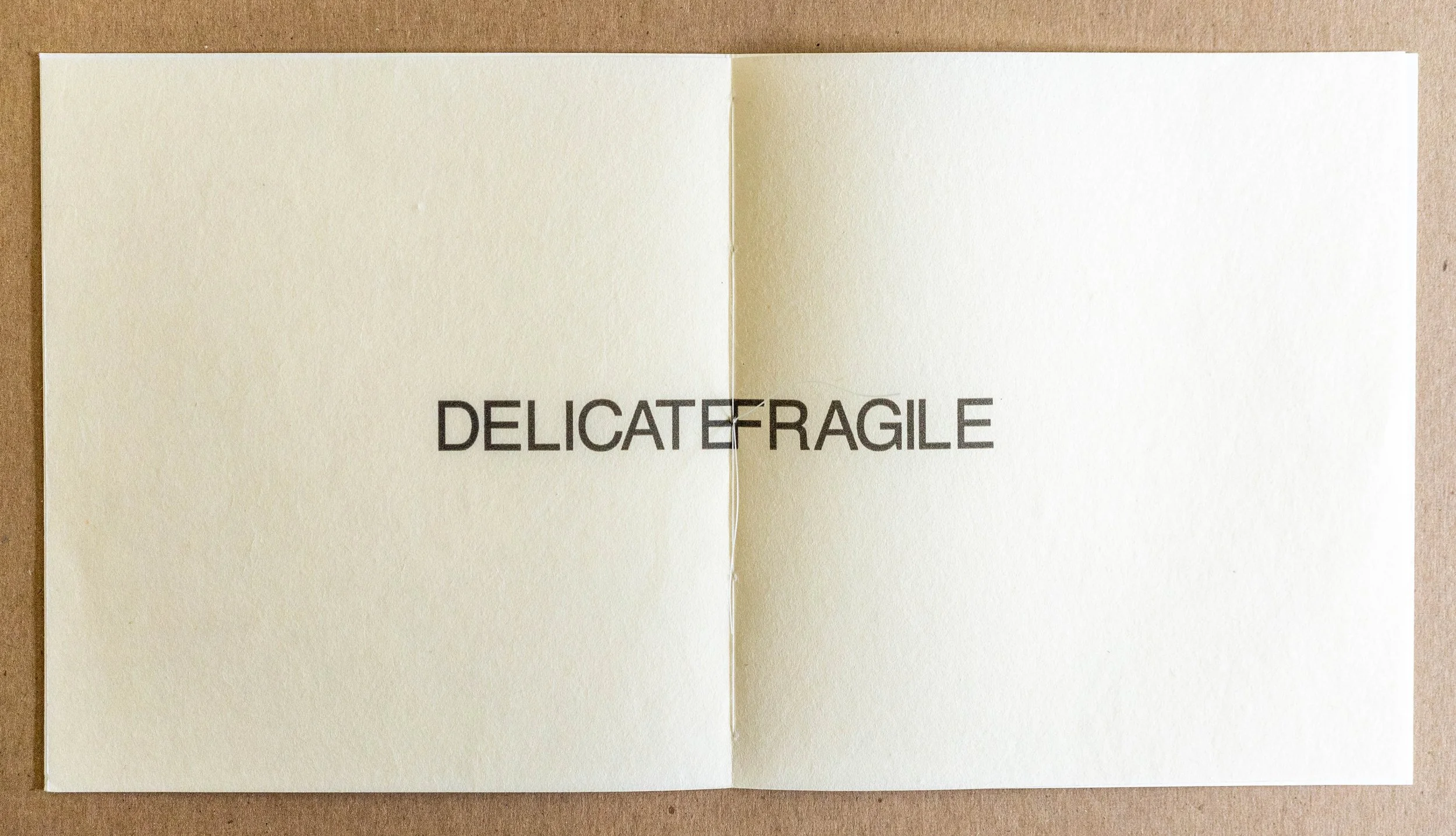
The Meaning is as Fragile as the Flesh Between Us is a book that invites a pair of participants to consider the ways they understand, have experienced and embody the subtle contextual differences in meaning found in English synonym pairs. Participants are asked to read the word pairs (harm/hurt, delicate/fragile for example) aloud to a partner sitting face to face with them. Then, each reader expresses how they have come to personally understand the similarities and differences found in the word pairs using any language they have access to.
Language alone is imperfect. When we communicate through text or in environments without access to facial expressions and vocal tones, it becomes very easy to project our own emotional state onto the other person's message. This concept has roots in what Kenneth Craik called the “mental model.” Mental models are the internal representations of external reality that one uses to understand, interpret, and navigate the world. Our understanding is filtered through our worldviews and lived experiences, and because our worldviews affect how we interpret experiences, these mental models play a significant role in the ways we understand and, more often than not, misunderstand one another.
As communicators, we often say things that land differently than we intended. This happens because of what psychologists call the "illusion of transparency" — we assume our thoughts and intentions are obvious to others. Since we already know what we mean, we mistakenly believe our words carry that meaning on their own. But when we speak from personal experience, we have access to cultural and emotional context that our listeners do not; they can only interpret what we say through the lens of their own lives.
Past participants have delved deep into forgotten family histories, personal struggles and triumphs, and connected the personal with the political in profound ways using primarily verbal communication. In some cases, participants have utilized the language of movement and other forms of non-verbal communication to express how the nuanced understandings often come from a place of feeling, not knowing.